
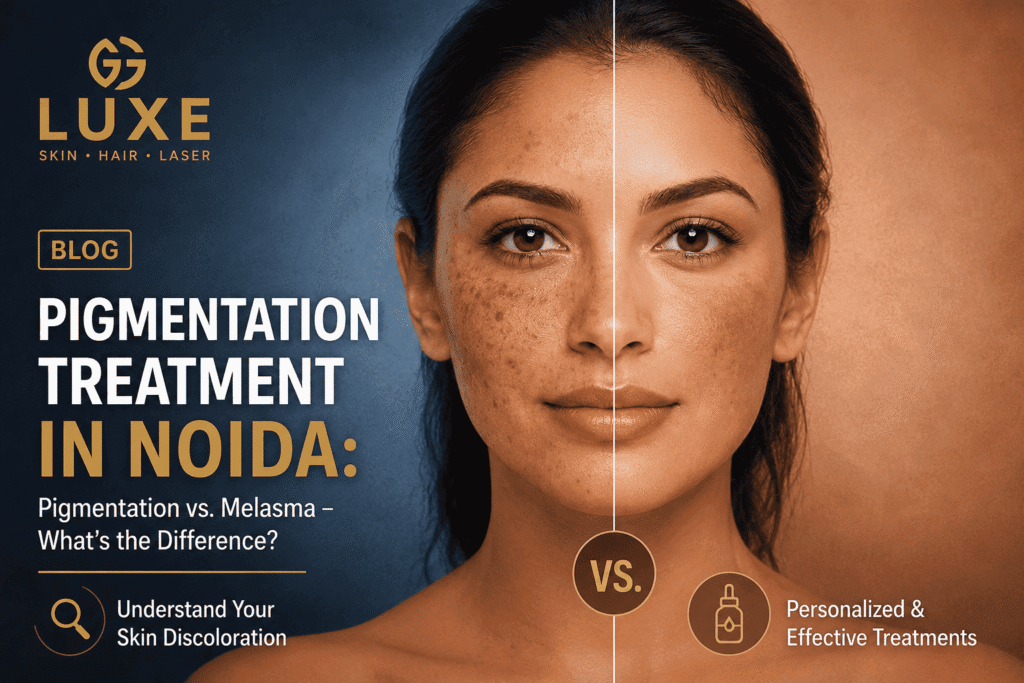
Pigmentation Treatment in Noida: Pigmentation vs. Melasma – What’s the Difference?
Have you ever looked in the mirror and noticed dark patches or uneven skin tone on your face? Many people assume that every dark spot is the same, but that’s not true. Two of the most common skin concerns are pigmentation and melasma. While they may look similar, they have different causes, triggers, and treatment approaches.
Understanding the difference between pigmentation and melasma is important because the right diagnosis can help you choose the most effective treatment. If you’re considering Pigmentation Treatment in Noida, knowing what type of skin condition you have is the first step toward achieving clearer, healthier skin.
At GG Luxe, we often meet patients who are confused about whether they are dealing with pigmentation or melasma. This guide will help you understand both conditions in simple words and learn about the treatment options available.
Table of Contents
- What Is Pigmentation?
- What Is Melasma?
- Pigmentation vs. Melasma: Key Differences
- Common Causes of Pigmentation and Melasma
- Why Professional Diagnosis Matters
- Pigmentation Treatment in Noida for Different Skin Concerns
- How to Prevent Pigmentation and Melasma
- When Should You Visit a Skin Specialist?
- Conclusion
What Is Pigmentation?
Pigmentation refers to any change in your skin color caused by excess melanin production. Melanin is the natural pigment that gives your skin, hair, and eyes their color.
When melanin production increases in certain areas, dark spots, patches, or uneven skin tone can appear. Pigmentation can affect people of all ages and skin types.
Common types of pigmentation include:
- Sunspots
- Age spots
- Post-inflammatory hyperpigmentation
- Freckles
- Acne marks
Pigmentation often develops due to sun exposure, skin injuries, acne, hormonal changes, or aging.
Pigmentation Treatment in Noida for Common Pigmentation Issues
Many pigmentation concerns respond well to professional treatments such as chemical peels, laser therapy, skin-brightening procedures, and dermatologist-recommended skincare products. The right treatment depends on the depth and cause of pigmentation.
What Is Melasma?
Melasma is a specific type of pigmentation that usually appears as brown, gray-brown, or dark patches on the face. It commonly affects the cheeks, forehead, nose, and upper lip.
Melasma is strongly linked to hormonal changes and is more common in women, especially during pregnancy or while taking hormonal medications.
Unlike regular pigmentation, melasma often appears in larger, symmetrical patches on both sides of the face.
Common triggers of melasma include:
- Hormonal changes
- Pregnancy
- Birth control pills
- Excessive sun exposure
- Genetics
- Heat exposure
Melasma can be more challenging to treat because it tends to return if the underlying triggers are not controlled.
Pigmentation Treatment in Noida for Melasma Management
For melasma, treatment usually involves a combination of advanced dermatological procedures, medical-grade skincare, sun protection, and lifestyle modifications. Consistent care is essential for long-term improvement.
Pigmentation vs. Melasma: Key Differences
Although both conditions involve dark patches on the skin, there are several important differences.

Understanding these differences can help ensure you receive the most appropriate Pigmentation Treatment in Noida for your specific skin concern.
Common Causes of Pigmentation and Melasma
Several factors can contribute to skin discoloration.
Sun Exposure
UV rays stimulate melanin production, leading to dark spots and uneven skin tone. Without sunscreen, both pigmentation and melasma can worsen over time.
Hormonal Changes
Hormones play a major role in melasma development. Pregnancy, menopause, and hormonal medications can trigger noticeable skin changes.
Acne and Skin Inflammation
After acne heals, dark marks may remain. This condition is called post-inflammatory hyperpigmentation and is one of the most common pigmentation concerns.
Genetics
Some people are naturally more prone to pigmentation disorders due to their family history.
Aging
As we age, years of accumulated sun exposure can lead to age spots and other pigmentation issues.
Why Professional Diagnosis Matters
Many people try over-the-counter creams without knowing the exact cause of their skin concern. Unfortunately, using the wrong products can sometimes make pigmentation worse.
A qualified skin specialist can examine your skin and determine whether you have:
- Melasma
- Sun-induced pigmentation
- Acne-related pigmentation
- Age spots
- Other skin conditions
This accurate diagnosis allows for a personalized treatment plan and better results.
Pigmentation Treatment in Noida Starts with Proper Evaluation
At a professional skin clinic, your skin type, lifestyle, medical history, and pigmentation pattern are carefully evaluated before recommending treatment. This customized approach often leads to safer and more effective outcomes.
Pigmentation Treatment in Noida for Different Skin Concerns
Modern dermatology offers several advanced options for treating pigmentation and melasma.
Chemical Peels
Chemical peels help remove damaged skin layers and improve skin tone. They are often used for mild pigmentation and acne marks.
Laser Treatments
Laser technology targets excess melanin and helps reduce stubborn pigmentation. It can be effective for selected cases when performed by experienced professionals.
Medical Skincare
Prescription creams and dermatologist-approved skincare products can help control pigmentation and prevent new spots from developing.
Advanced Skin Rejuvenation Procedures
Depending on your skin condition, advanced treatments may be recommended to improve overall skin texture and brightness while reducing discoloration.
The best Pigmentation Treatment in Noida is always one that is tailored to your individual skin needs rather than a one-size-fits-all solution.
How to Prevent Pigmentation and Melasma
While treatment can improve skin appearance, prevention is equally important.
Follow these simple tips:
- Wear broad-spectrum sunscreen daily.
- Reapply sunscreen every few hours when outdoors.
- Avoid excessive sun exposure.
- Use gentle skincare products.
- Avoid picking at acne.
- Maintain a healthy skincare routine.
- Follow your dermatologist’s advice consistently.
These habits can help protect your skin and reduce the chances of pigmentation returning.
When Should You Visit a Skin Specialist?
You should consider consulting a specialist if:
- Dark patches are increasing in size.
- Home remedies are not working.
- Pigmentation affects your confidence.
- You are unsure whether you have melasma or pigmentation.
- Existing treatments have not provided results.
Early diagnosis often leads to better treatment outcomes and prevents pigmentation from becoming more difficult to manage.
Conclusion
Pigmentation and melasma may appear similar, but they are not the same condition. Pigmentation can result from several factors such as sun damage, acne, aging, or skin injury, while melasma is usually linked to hormonal changes and sun exposure.
Understanding the difference is the first step toward choosing the right treatment. If you’re struggling with dark spots, uneven skin tone, or stubborn facial patches, seeking professional guidance can make a significant difference.
At GG Luxe, expert evaluation and personalized care can help identify the root cause of your skin concern and recommend the most suitable Pigmentation Treatment in Noida for healthier, clearer, and more radiant skin.